

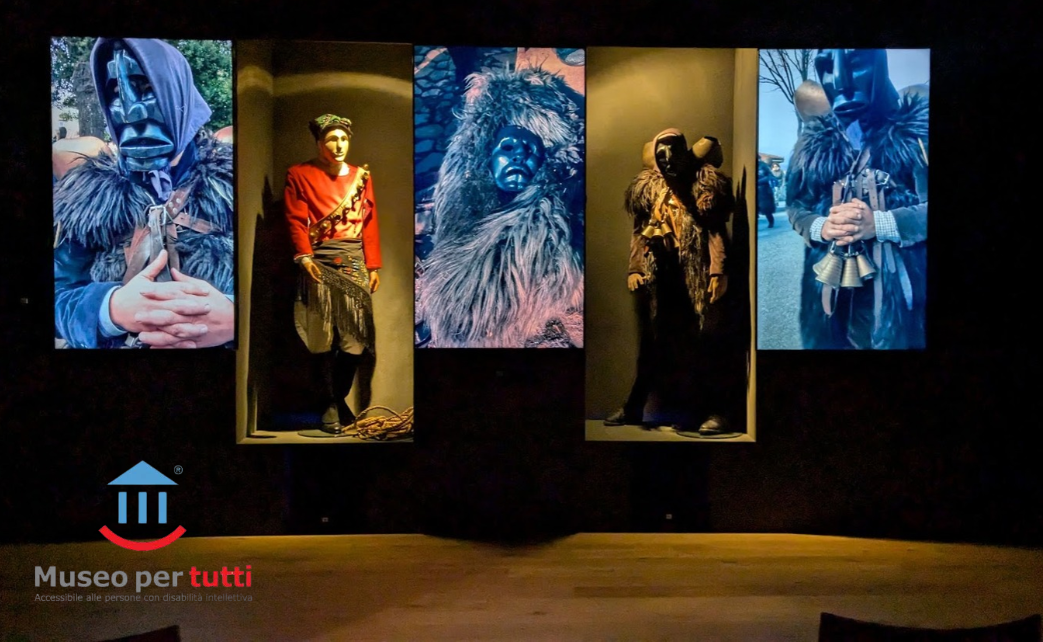
An in-depth article dedicated to our Museum’s commitment to breaking down cognitive and cultural barriers has been published on the official website of the national project sponsored by L’abilità ETS and the KPMG Italia ETS Foundation.
Being selected and highlighted as a model institution in the national landscape of cultural accessibility is a source of great pride for the Museum of Mediterranean Masks in Mamoiada. On the official website of “Museo per tutti” — the project conceived by L’abilità ETS with support from the KPMG Italia ETS Foundation — an article has been published that highlights the work carried out by our museum, alongside two other important Italian institutions: the Pulcinella Museum in Acerra and the Val di Cornia Parks in Populonia.
In the feature dedicated to these three outstanding attractions, the initiative’s organizers emphasize that the collaboration they have launched aims to break down not only physical barriers, but above all cognitive and communication barriers, ensuring that every visitor has the right to understand the content and fully enjoy the visit.
The Traditions of Mamoiada: A Story for Everyone
As highlighted in the article, this approach makes the narrative of traditional carnivals in Sardinia and the Mediterranean even more inclusive—starting with the iconic figures of the Mamuthones and Issohadores.
The project described in the pages of *Museo per tutti* was not limited to the creation of accessible guides and communication tools designed specifically for people with intellectual disabilities; it also directly involved museum staff through specialized training programs, with the aim of providing an increasingly attentive, knowledgeable, and sensitive visitor experience.
An award that looks to the future
The story published by “Museo per tutti” confirms the vision of the Museum of Mediterranean Masks as a vibrant, community-oriented space open to dialogue: a cultural hub where accessibility is not merely a technical requirement, but a fundamental value for sharing the historical roots and identity of our community with everyone—families, schools, day centers, and individual visitors.
Read the full article on the official “Museo per tutti” website


